Lamalera: The Village From Our Father's Stories
A childhood myth, 750 kilometers across Flores, an erupting volcano, a sea hunt, and the most stressful race back to Bali we have ever had.
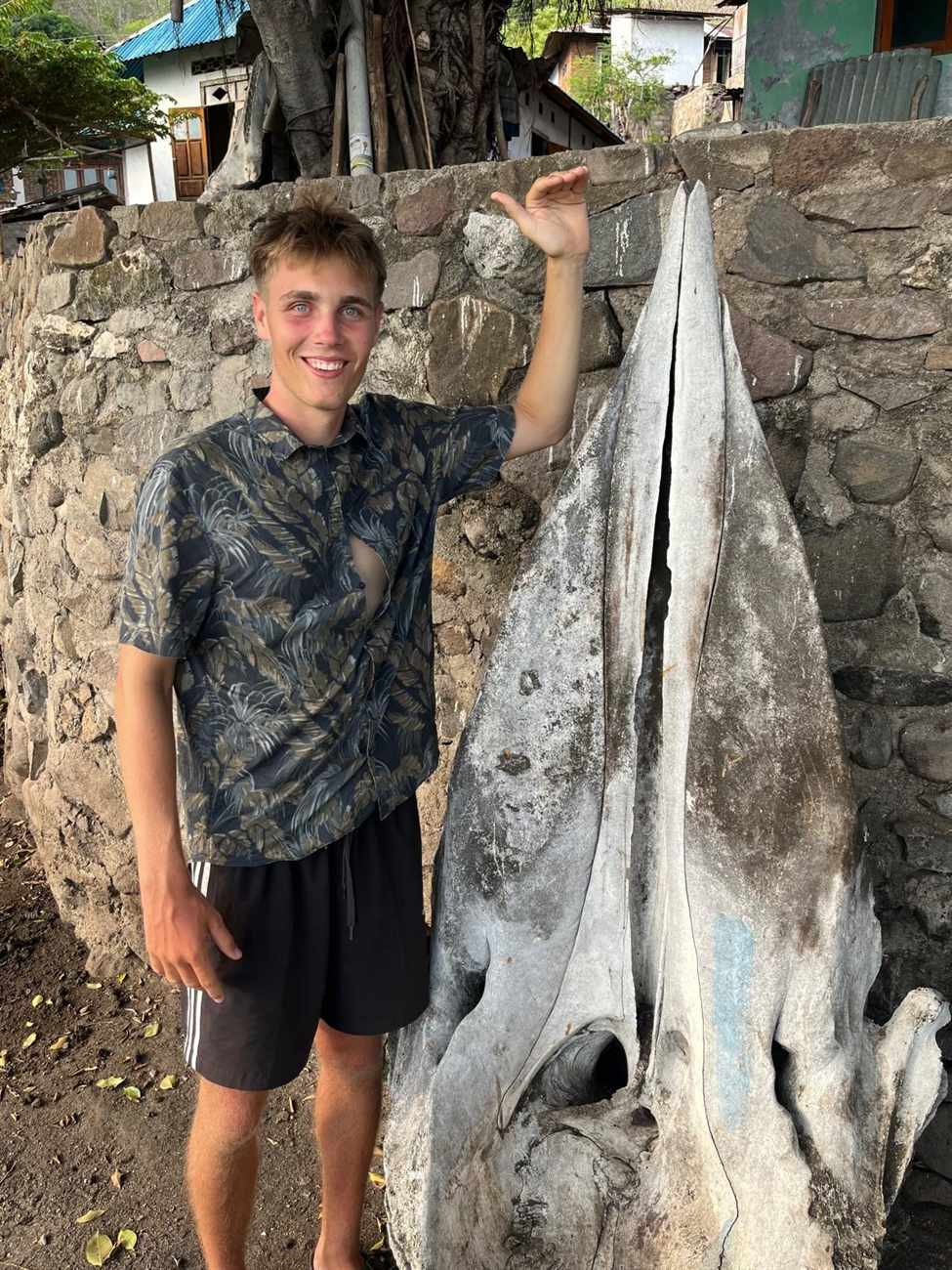
Lamalera before we ever saw it
Funny enough, many Indonesians do not know the village of Lamalera by name, but they do know that a place like it exists. For us, though, Lamalera had always meant something very specific.
Our father had been there more than 30 years earlier. When we were children, he used to tell us bedtime stories from this traditional whaling village: a remote place far away from tourism, where people still went out to sea in wooden boats and hunted in the old way. We had never seen a real picture of it, but the image in our heads was always there.
In 2022, when we were 16, we travelled to Indonesia with our father for the first time and visited Java. We fell in love with the country almost immediately, started learning the language, and returned in 2024 after graduation with time, curiosity, and a fairly dangerous amount of appetite for adventure.
Then, while we were in Labuan Bajo, one thought suddenly appeared: how far is Lamalera from here, actually? We had never seriously considered going there before. Maybe because it had always felt more like a story than a reachable place.
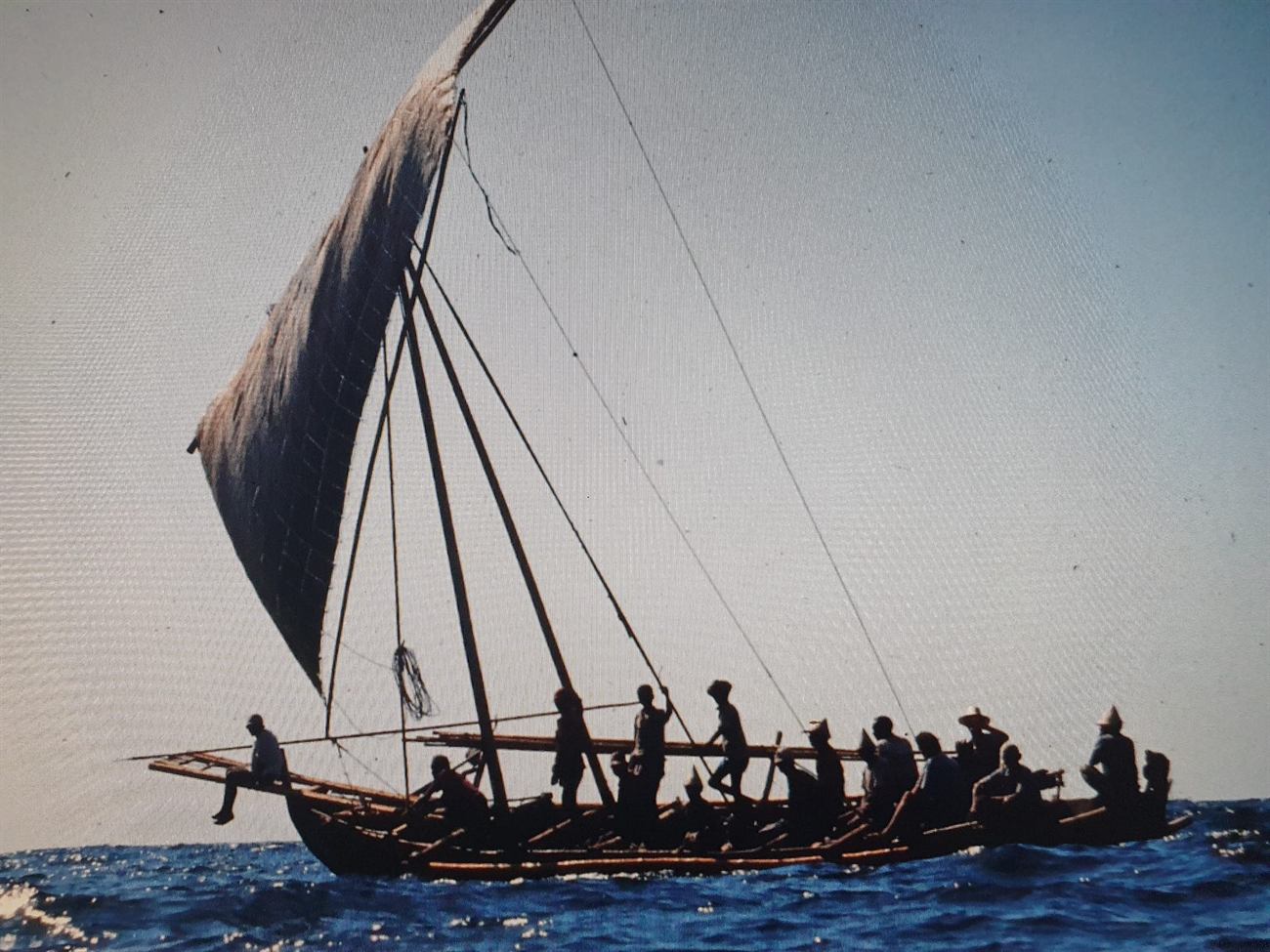
It was early November, which was not ideal. The main hunting season usually runs from May until the end of September, when the sea is richer and more marine mammals pass through. Still, once the idea was there, we could not get rid of it.
So we left our girlfriends in Labuan Bajo, rented scooters, and started riding east. More than 750 kilometers toward Lamalera.
The special thing about this route is that you leave the obvious tourist path behind. Flores opens up slowly: mountain roads, villages, rice fields, volcanoes, quiet coastlines, and long stretches where you are mostly alone with the road.
- Wae Rebo
- Keligejo
- Wae Belang and the spiderweb rice fields
- Kelimutu, the three-colored volcano
- many villages and small natural places that never make it into a standard itinerary
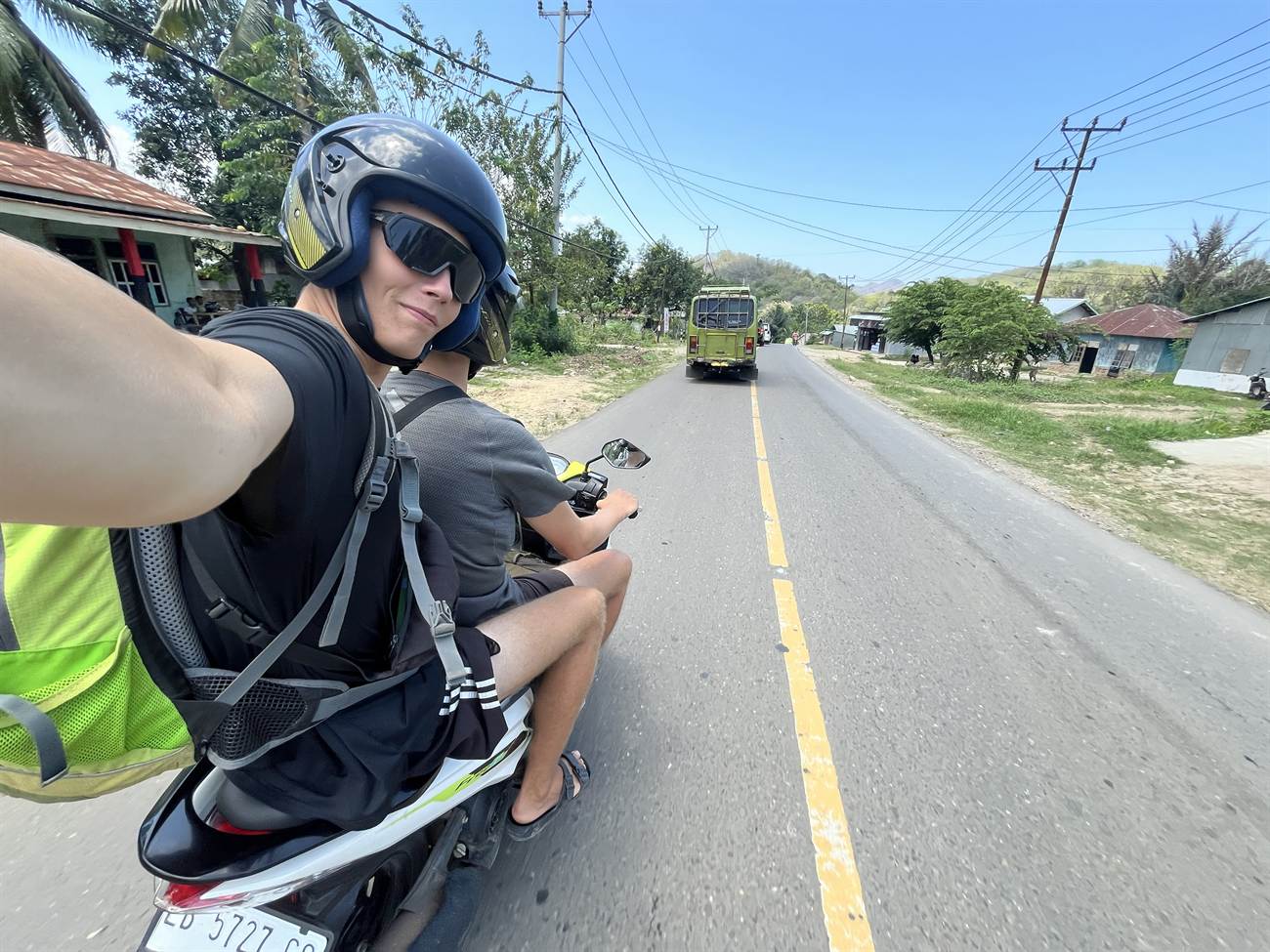
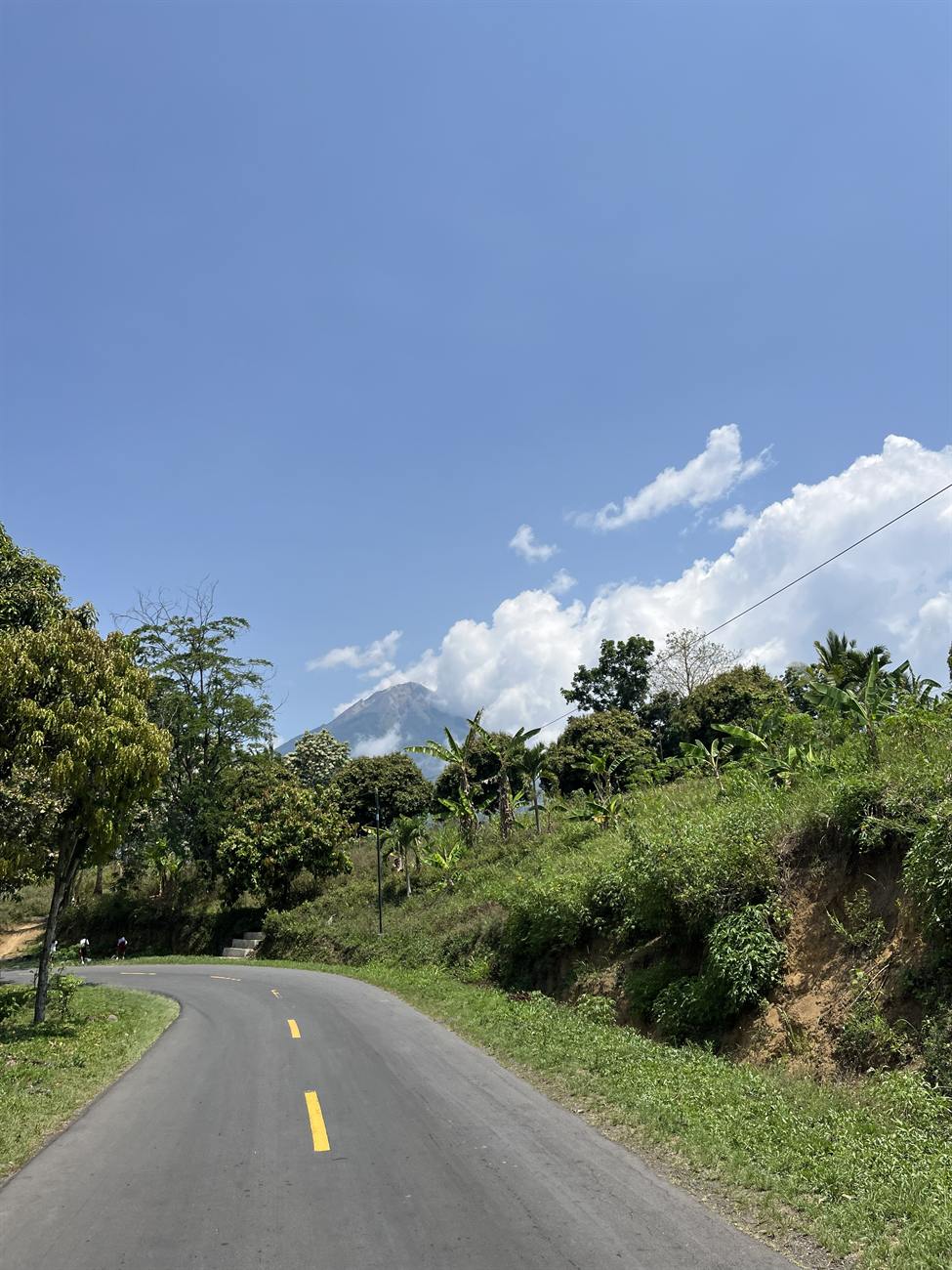
After two full days on scooters from morning until evening, we had enough. By the time we reached Ende, around 390 kilometers from Labuan Bajo, it was simply too hot, too exhausting, and in parts too dangerous to keep pushing on two wheels.
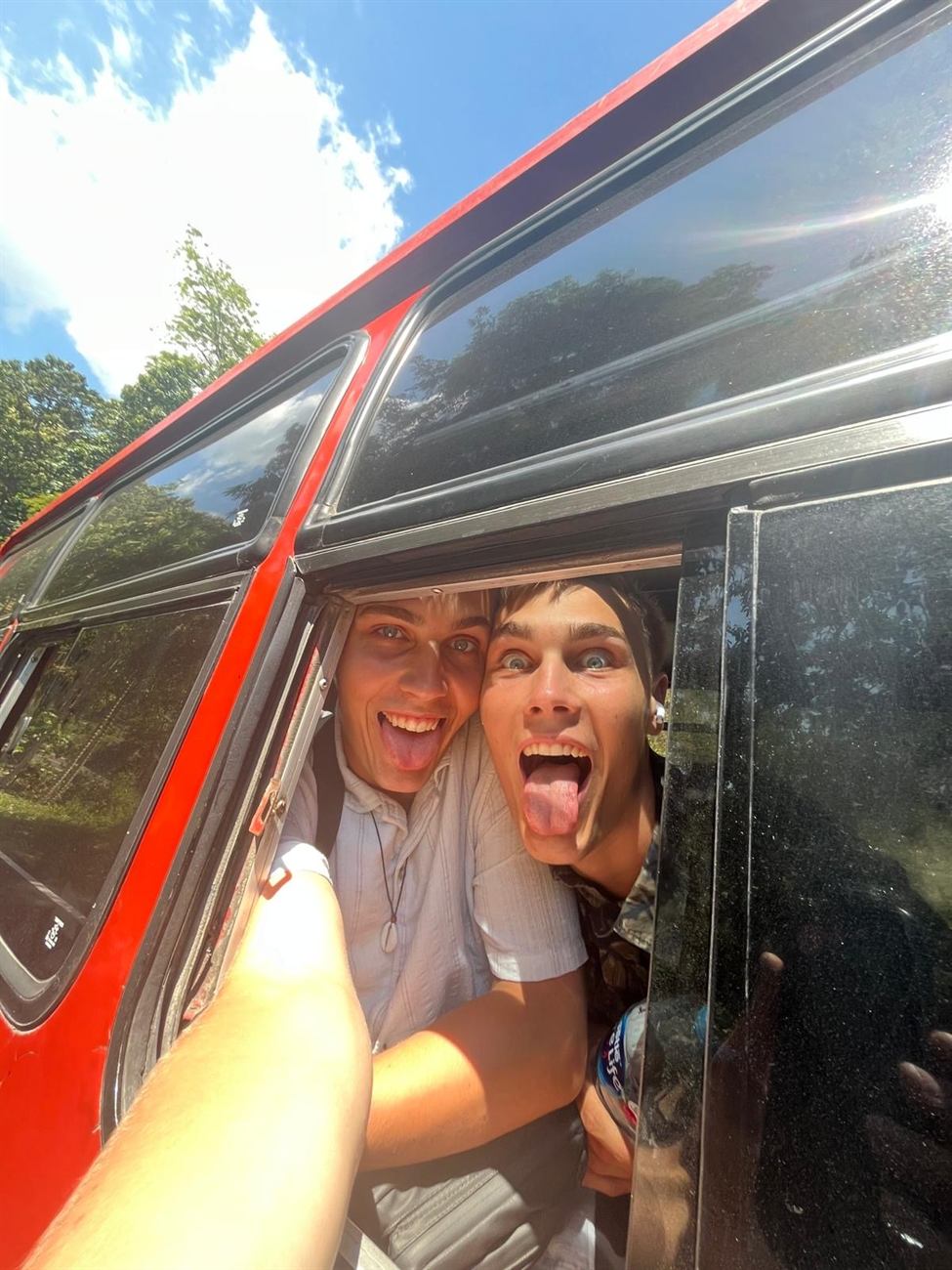
So we parked the scooters in Ende and switched to a bemo, the local transport bus. That decision felt sensible for about five minutes. Then the next problem arrived.
The volcano that almost ended the route
Lewotobi Laki-Laki had erupted. The ash cloud was massive. Flights were cancelled, and even Bali was affected. Nobody could tell us with full confidence whether the road toward Larantuka was still passable.
We asked locals, calls were made, and eventually the answer came back: yes, it should still be possible. So we continued, passing an active volcanic situation only a few kilometers away.
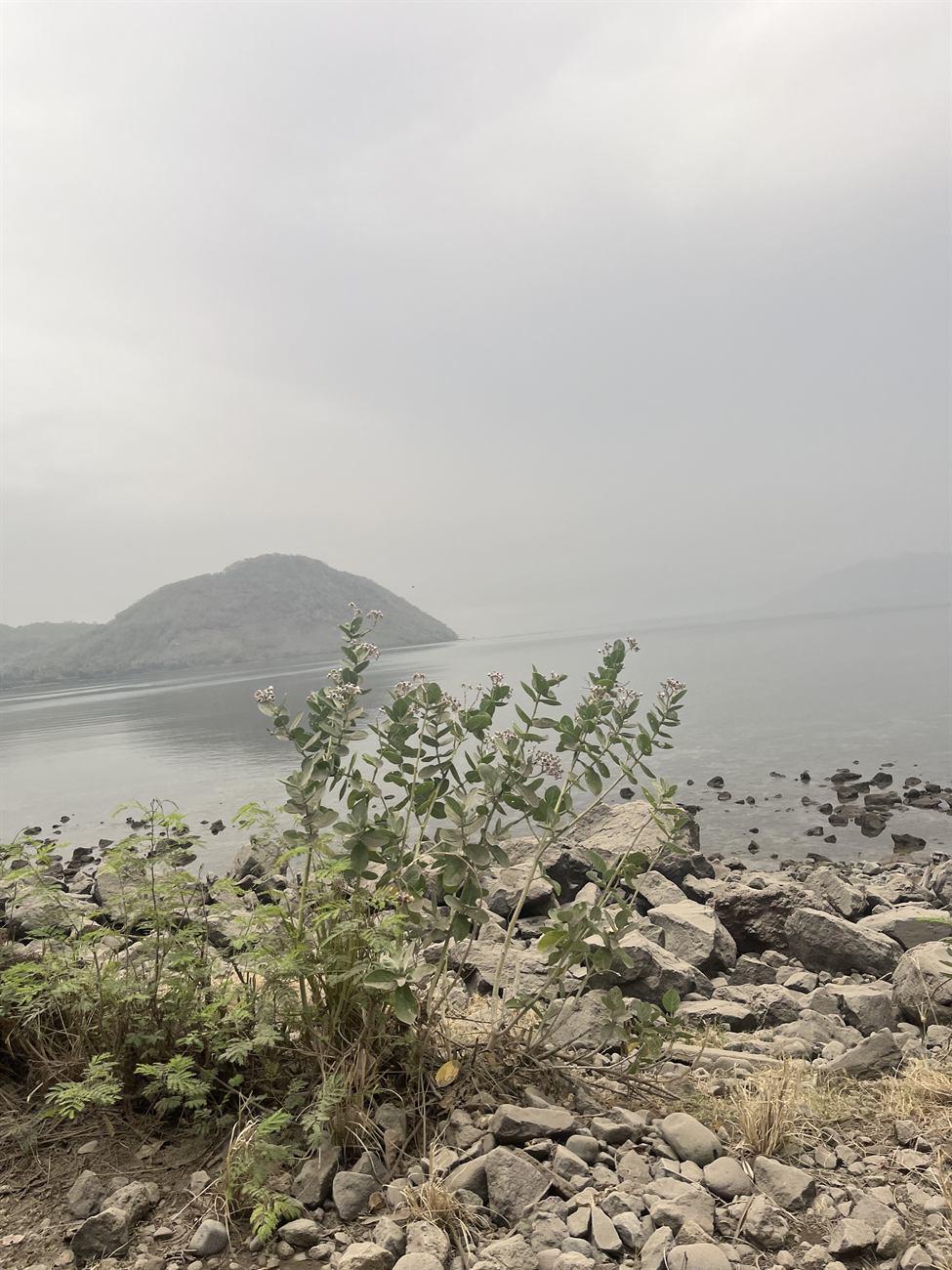
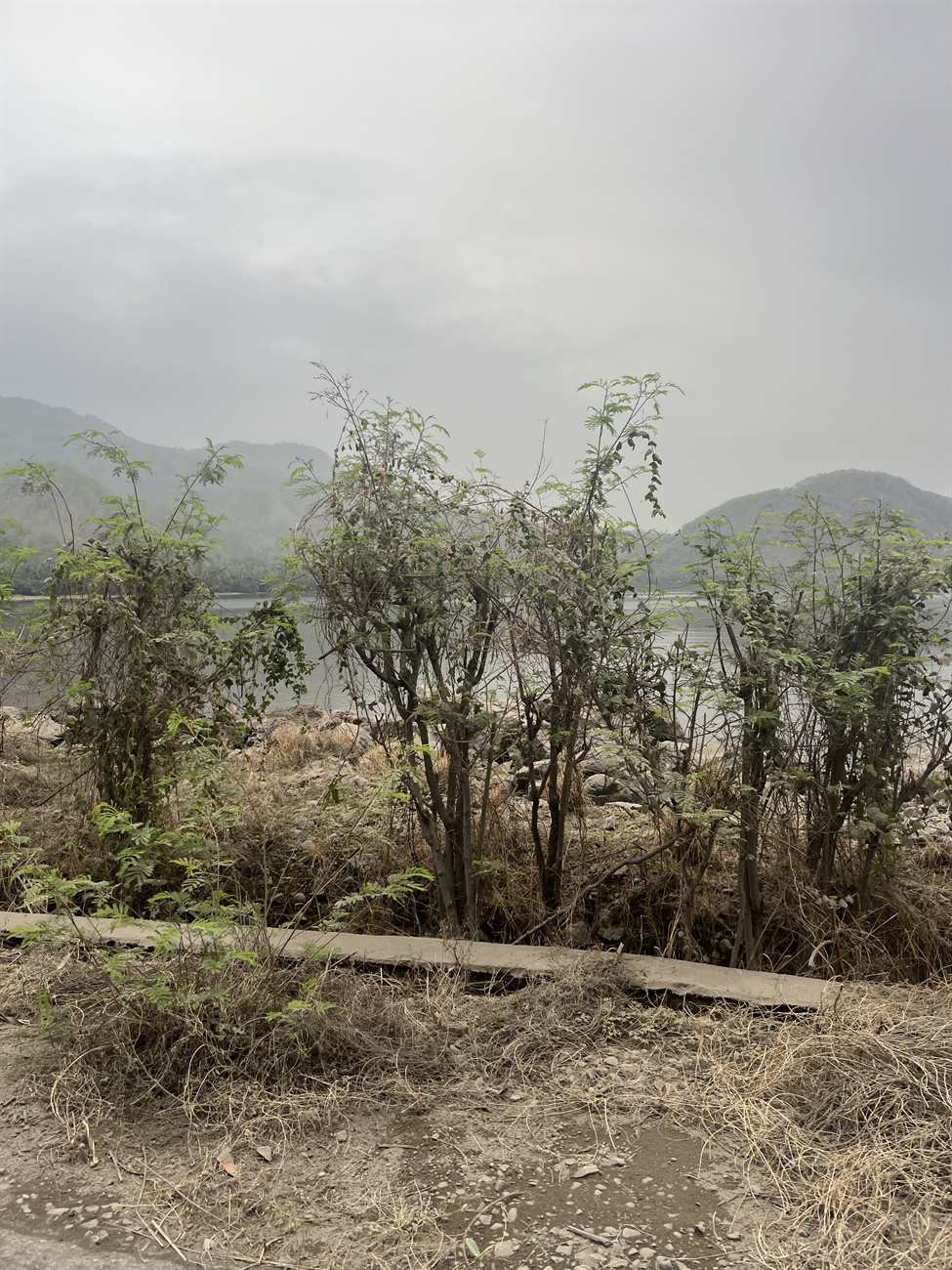
A few hours later, the atmosphere changed completely. The air became grey, leaves and plants were dusted with ash, and a huge cloud made the road feel less like travel and more like moving through the aftermath of something still happening.
We even stopped at a large evacuation camp, where donations were being collected for affected villages. It was one of those moments that makes a route feel very real very quickly. And it would not be the last time that volcano changed our plans.
Jefri, the hunt, and the race back to Bali
Already in Ende we had started looking for a place to stay in Lamalera. It was not that easy. A lot of things there still run through Google Maps, WhatsApp, and local contacts rather than polished booking systems.
One name immediately stood out: Jefri Bataona Homestay. We knew Jeffrey from our father's stories. Back then, our father had even encouraged him to build his own homestay. So we wrote to him, and incredibly, he still remembered our father.
We arranged to arrive two days later. Suddenly Lamalera was no longer just a place from bedtime stories. It was a village with a person waiting for us.
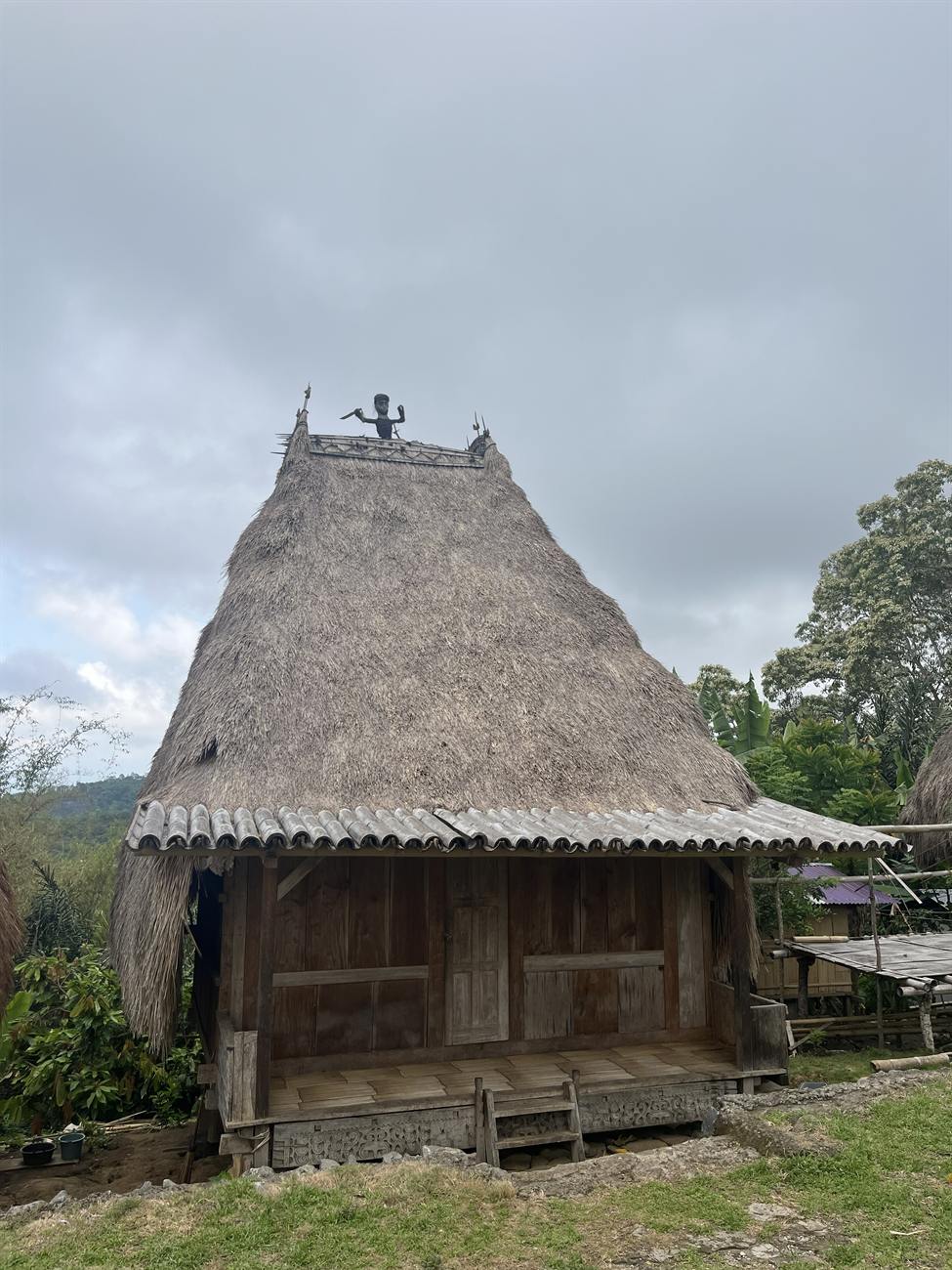
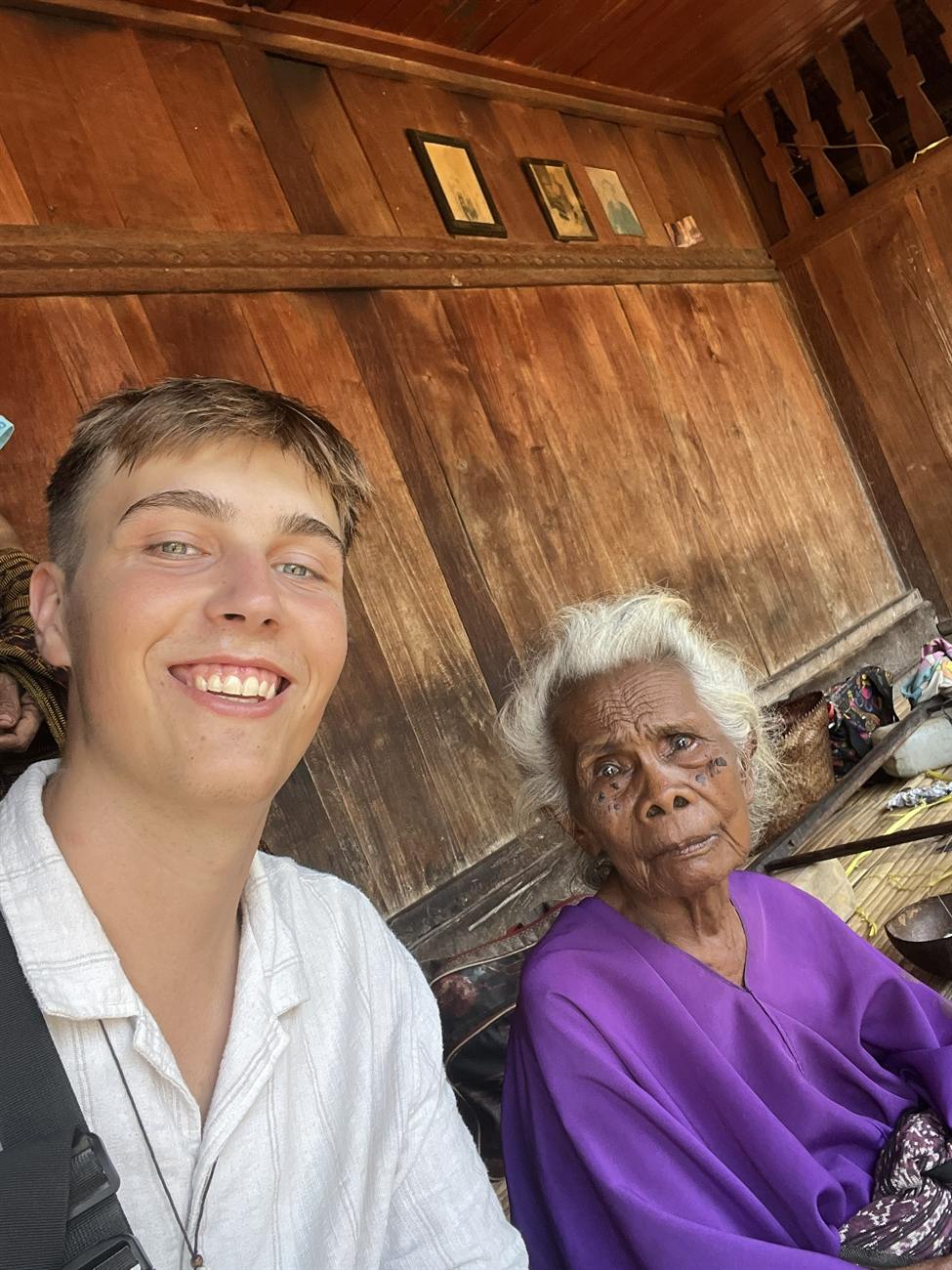
For the first two days we could not go out to sea because a wedding was taking place. Instead, we spent time with local people, played football, talked, watched village life, and saw some of the local craftwork, including jewelry made from teeth and bones of marine animals.
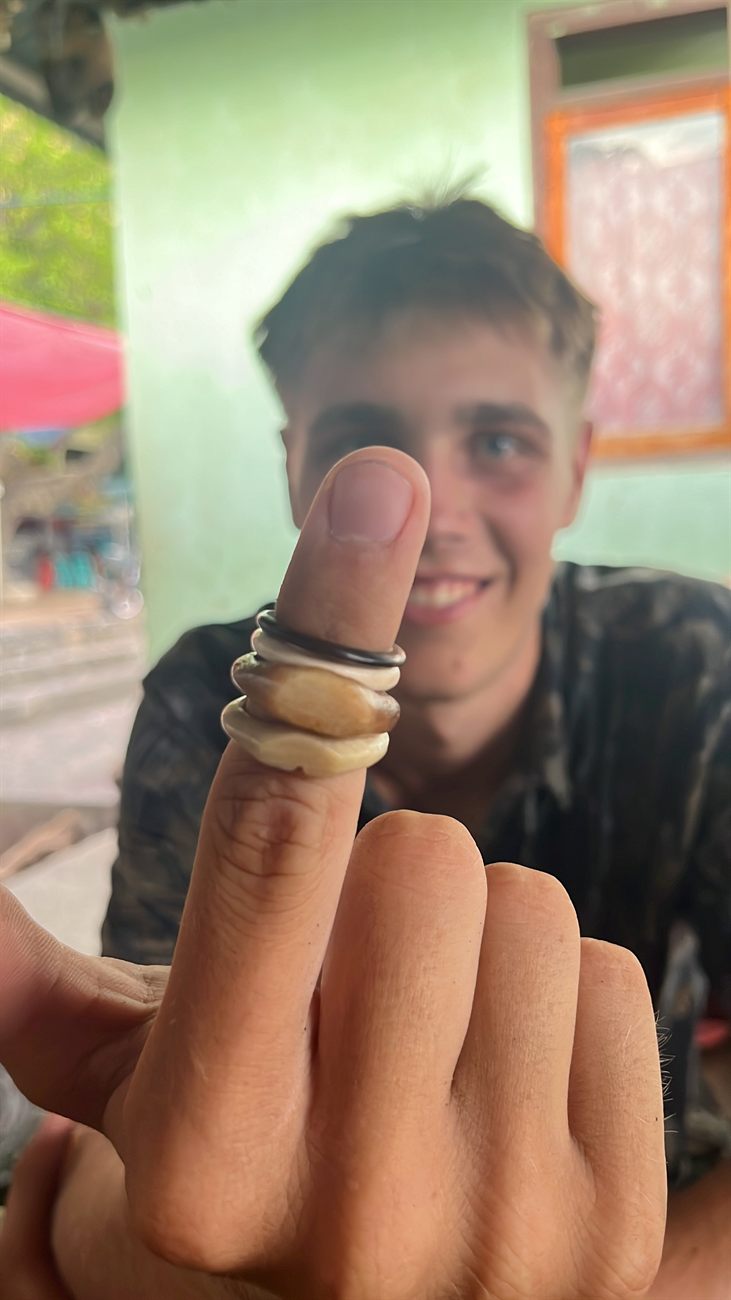
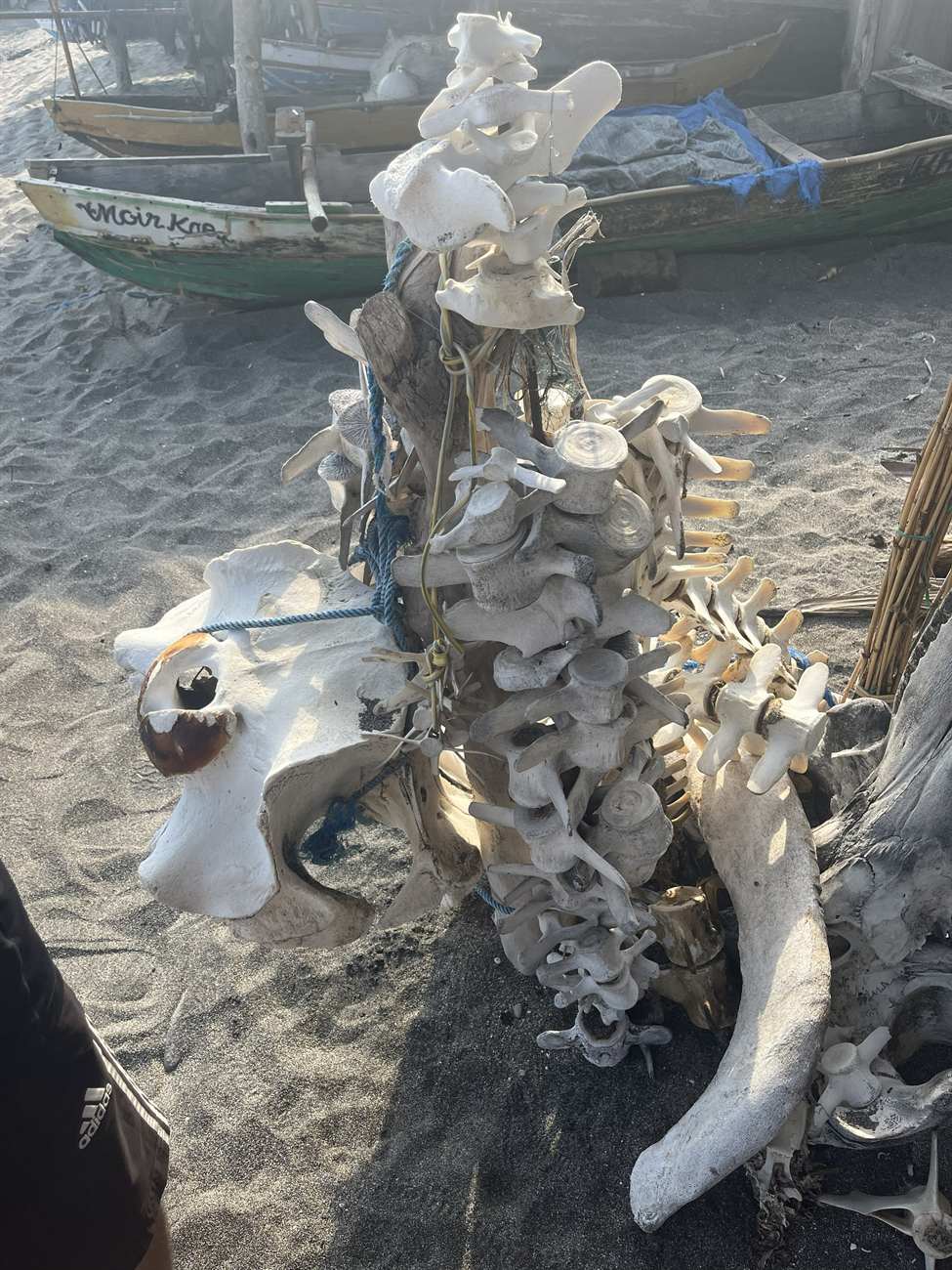
A hunt is not something that simply happens because visitors are there. Several things need to align: the fishermen need to be ready, the sea needs to be calm, and there need to be signs of animals, such as fountains, jumping dolphins, or simply the right season.
On the third day, we finally went out. After hours on the open sea, we saw a huge school of dolphins, hundreds of animals moving and jumping around the boat. A catch seemed almost certain, but two attempts failed. Honestly, we felt relieved. Watching the moment when an animal dies is not something to romanticize.
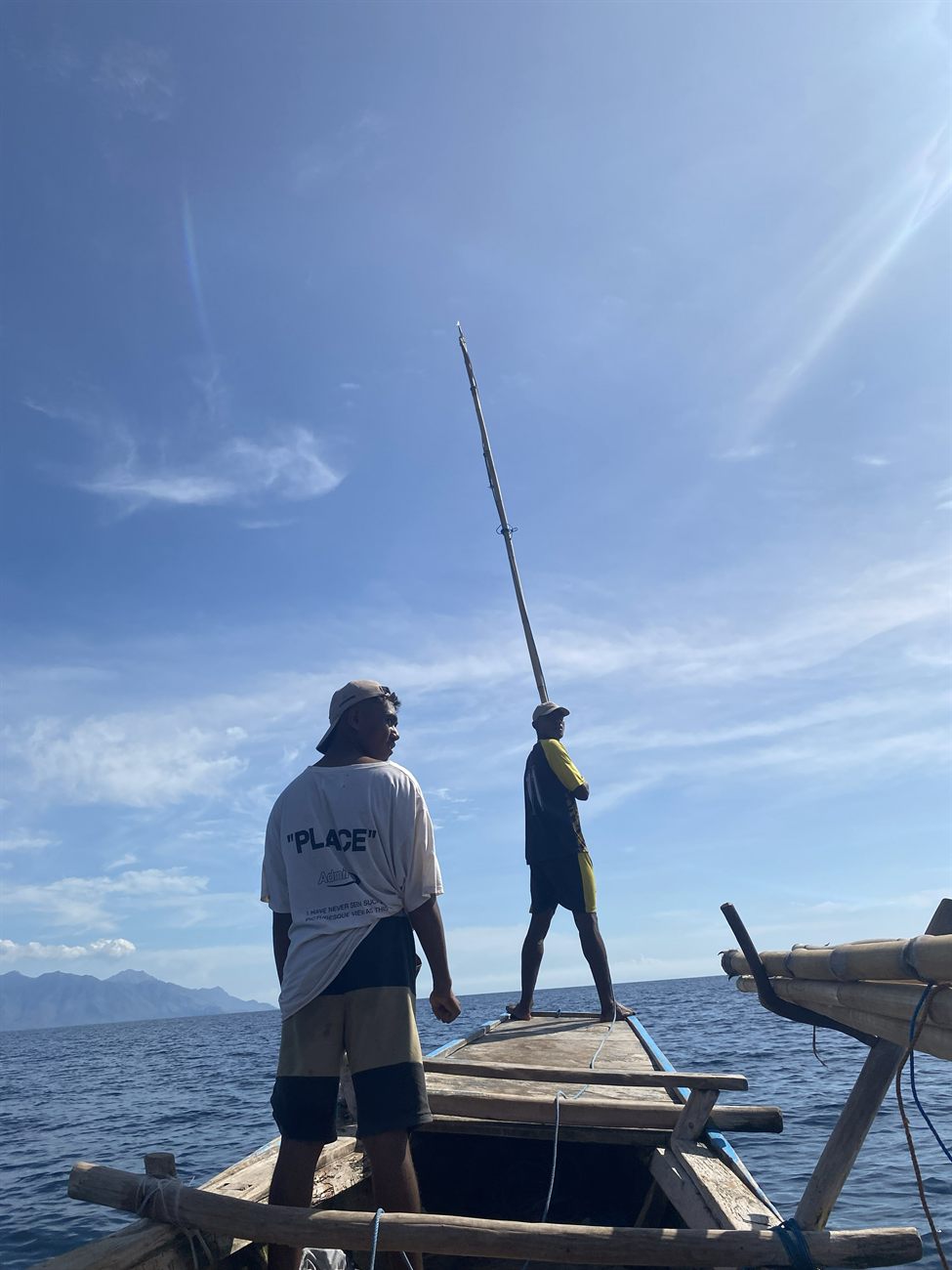
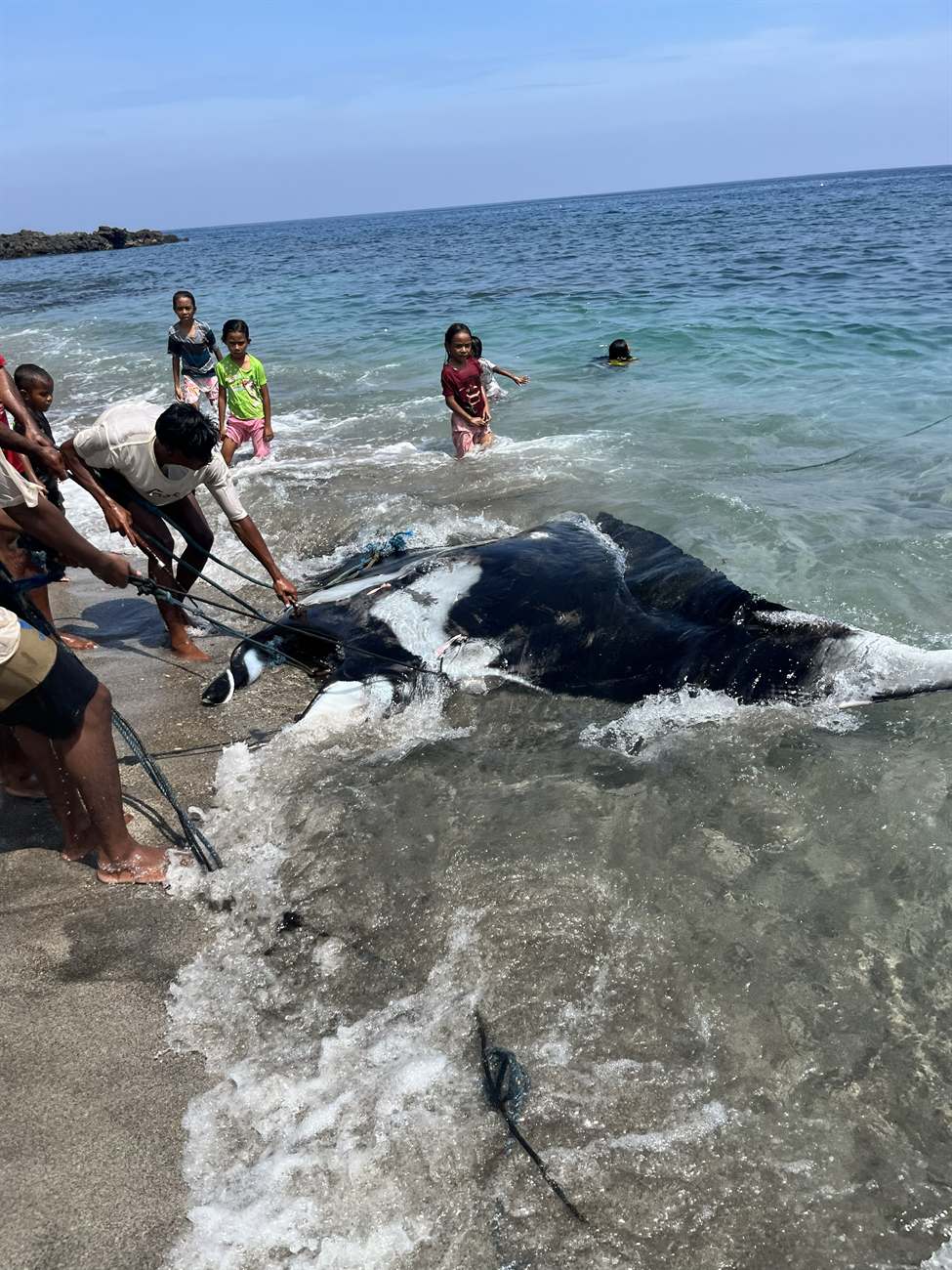
On the way back, after hours in the heat, everything changed within seconds. The harpoon was passed forward and pushed into the water. At first we thought it might be an orca, because the force was so strong. Then we understood: it was a large manta ray.
The manta was too big to bring in quickly, so it had to be pulled for several kilometers back to the beach. That slowed us down so much that we missed the only bus of the day toward the port town of Lewoleba.
That same day, while we were on the sea, we saw the second eruption of the volcano live: a huge ash cloud rising higher and higher into the sky. We should actually have left one day earlier to safely reach our flight from Labuan Bajo to Bali, where we had to leave Indonesia soon after because our visa was nearly finished. But leaving Lamalera without one more chance to go out on the water had felt impossible.
We knew the return could become stressful. We did not expect a harpooned manta, a missed bus, a second eruption, and cancelled flights.
Objectively, the stress made no sense. But this is now one of the stories we tell most often.
The next morning began at 4:30. Around the homestay, wedding guests were still sleeping from the night before: some outside on the ground, others on chairs. The mood was quiet and almost surreal after the celebration.
Jeffrey walked us to the bus and gave us traditional cigarettes for our father. The bus was supposed to leave later, but luckily it started unofficially early that day. We said goodbye with a clear promise: one day, we would come back.
Around 10:00, we took a speedboat from Lewoleba to Larantuka. As soon as we arrived, we looked for a bemo toward Ende. Because of the eruption, the road we had taken on the way in was now closed, so we had to take a detour. We reached Ende only around 22:00, exactly where our scooters were waiting.
Riding them all the way back would have taken too long. So the next morning at 6:00, we tied the scooter to the back of a bemo and drove to Ruteng. When no more bemo continued from there, we had no choice but to ride the final stretch ourselves.
At around 21:00 we finally reached Labuan Bajo, completely exhausted, with exactly one thought in our heads: pizza at Fellas.
We had made it across several islands and back in two days, with almost no sleep and constant pressure. The next morning, our flight was cancelled because of ash clouds from the new eruption.
What followed was another two-day chain of ferry, bemo, travel bus, taxis, speedboats, and more taxis just to reach Bali on time. For four days we were moving around 19 hours per day on average, only to arrive in Bali and learn that our onward flight for the next day had also been cancelled. To be clear: Bali and Lewotobi Laki-Laki are more than 1,350 kilometers apart by air.
So yes, in a practical sense, much of the stress was for nothing. But as a story, it became priceless. And maybe one day, it will become the perfect bedtime story too.