Agats and the Asmat
Finally visiting a local tribe in Papua
After our original plan to visit a local tribe near Dekai didn't work out, we chose an alternative — and what an alternative it was. Our destination: the Asmat.
Interestingly, the idea didn't even come from us. It was recommended by the police chief in Dekai. Agats was currently much safer, he said, and better suited for gaining real insight into the life of a local tribe.
Getting to Agats
The journey was long, but doable: from Dekai we flew back to Jayapura, then onward to Timika, and finally to Agats. And then, at last, we arrived.
Arriving in Agats: capital of the Asmat region
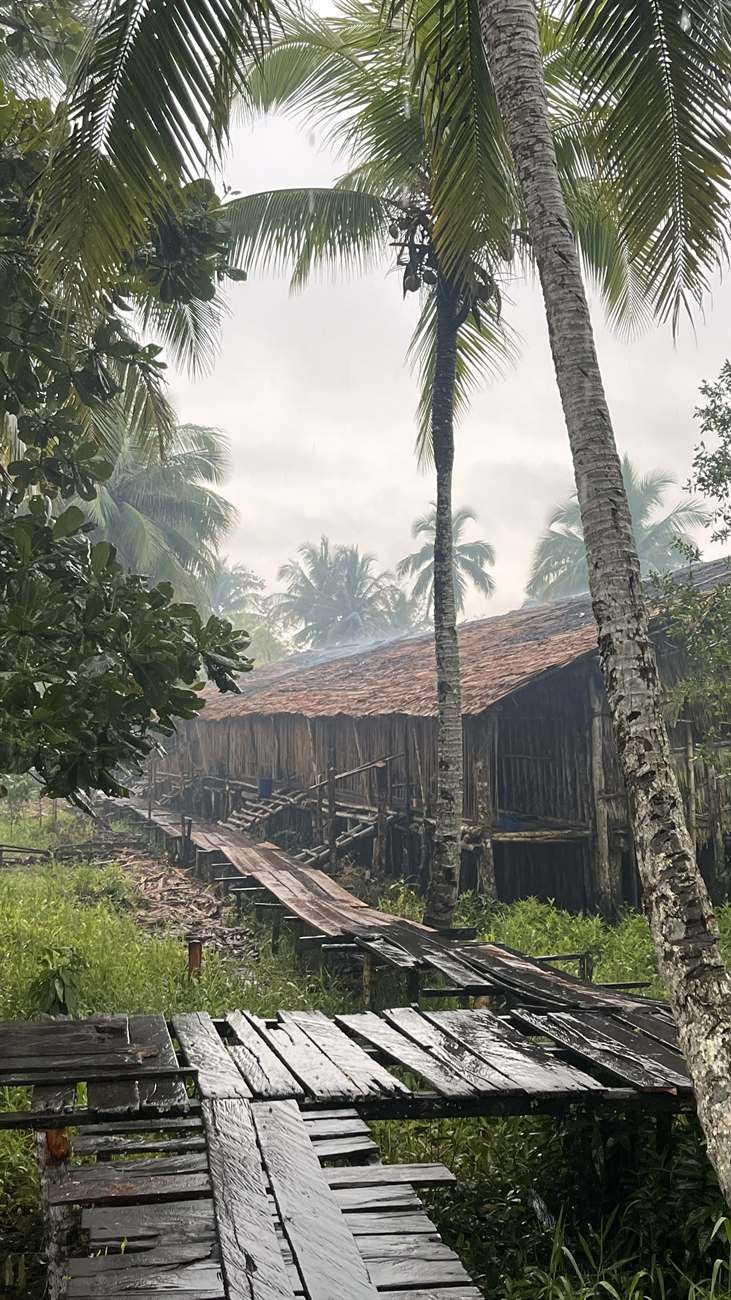
To get from the airport to the actual center of Agats, you have to take a water taxi. That short boat ride alone felt like an experience — wooden walkways, canals, stilt houses. You immediately notice: Agats runs on a different rhythm.
Compared to Dekai, Agats is noticeably better prepared for visitors. One reason is the large Asmat Festival held every October, featuring traditional dances, music, boat races — and above all, woodcarving.
Homestay life and first connections
In Agats, you can stay in several local homestays. We picked the first one we found — and got lucky. On the first day we made contacts that would later become crucial.
Our goal was clear: to visit a local Asmat village. When we told the staff at our homestay, they were visibly excited. They explained we could visit their own kampung — their village.
We quickly agreed on a price, and the next morning we set off.
Three hours by boat through mangroves
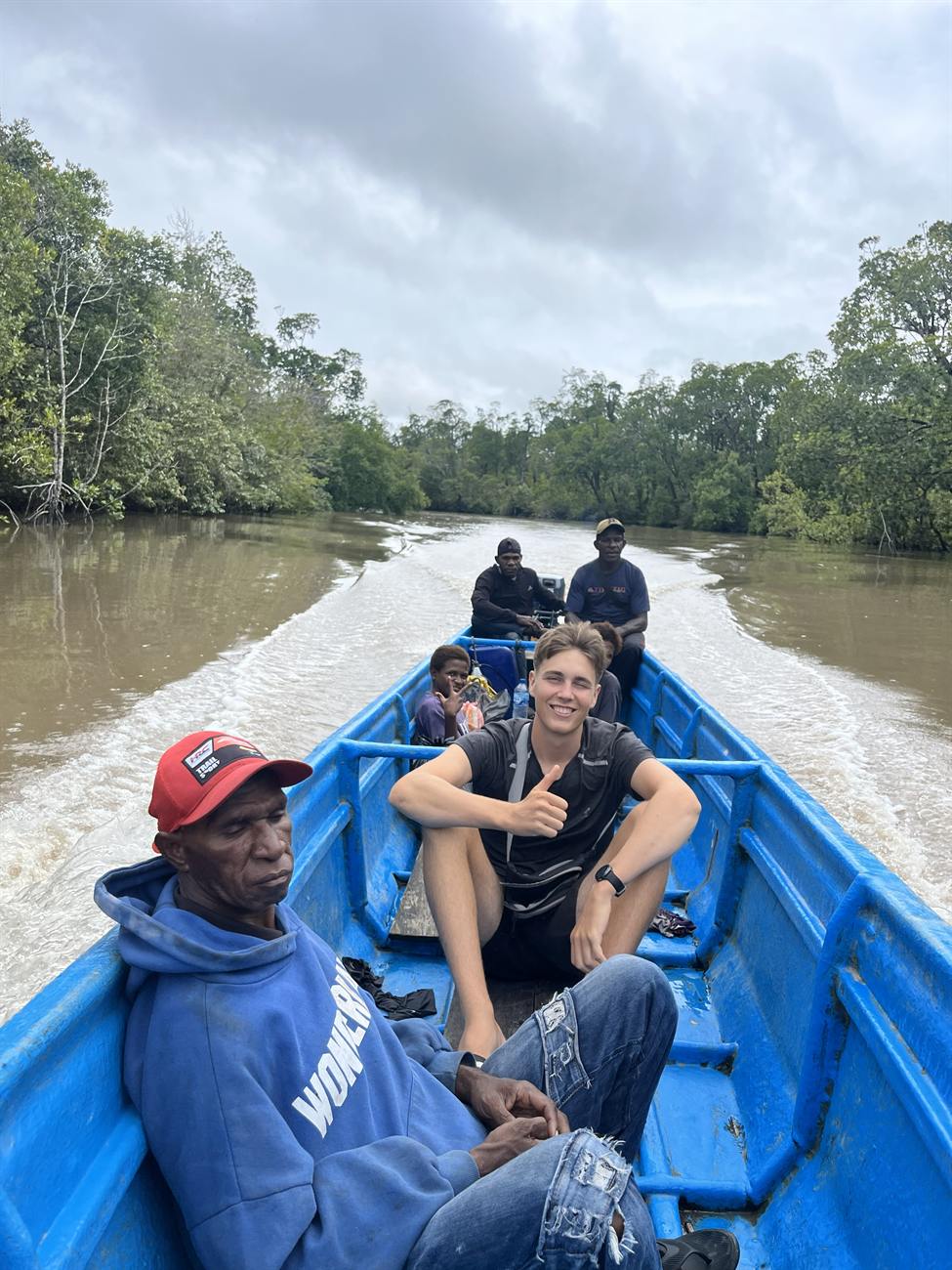
With their boat, we traveled for around three hours, deep into the mangrove forests. The ride felt almost magical: dense vegetation, brown water, and absolute stillness.
We kept an eye out for snakes and crocodiles — but at first, we didn't see any. That would change later.
Visiting an Asmat village
When we arrived, we were welcomed warmly. The first place they showed us was the men's house ? a huge communal hut where many men sleep.
Communication wasn't always easy. Our Indonesian helped, but in this remote part of Papua it was understood far less than elsewhere. A quick reminder why: Indonesia is home to more than 800 languages.
The Asmat and their woodcarving
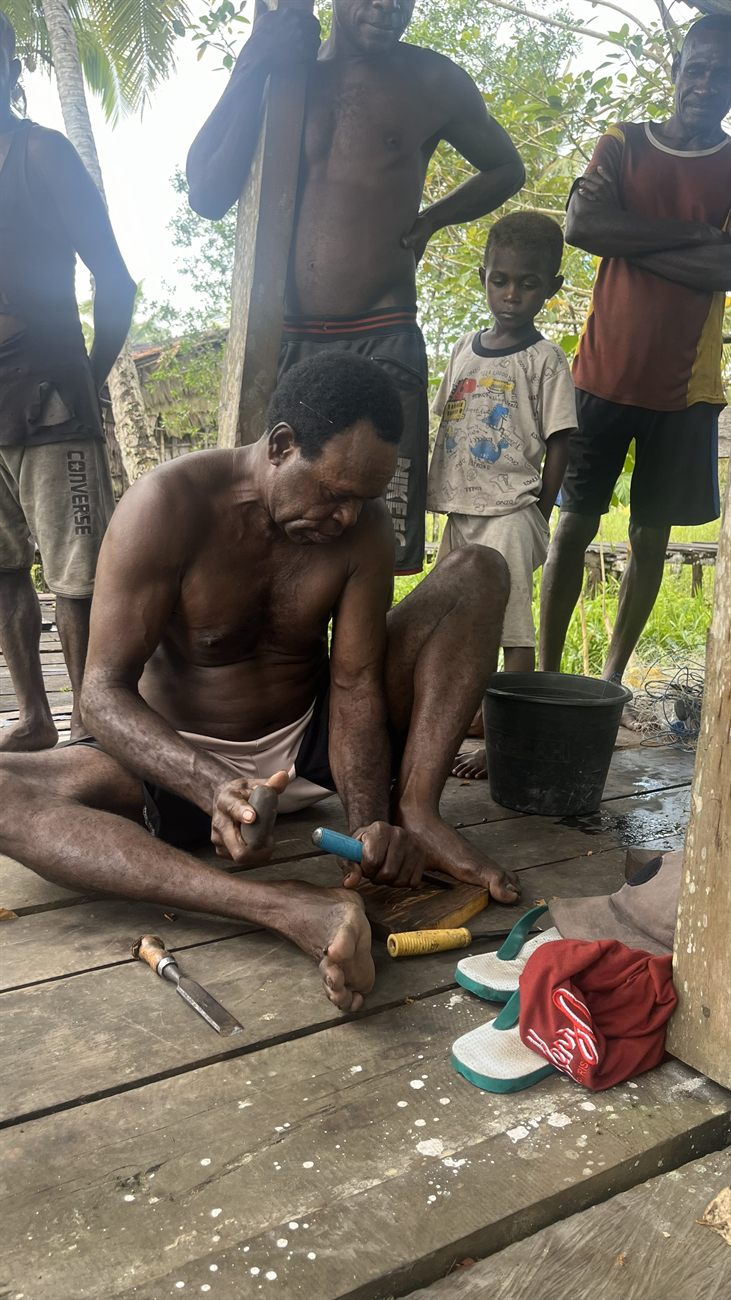
The Asmat are world-famous for their woodcarving. This art is deeply spiritual, and their work is represented in museums around the world.
Their reputation goes beyond art: in 1961, Michael Rockefeller disappeared without a trace after visiting the Asmat. Even today, locals can neither confirm nor deny what truly happened back then.
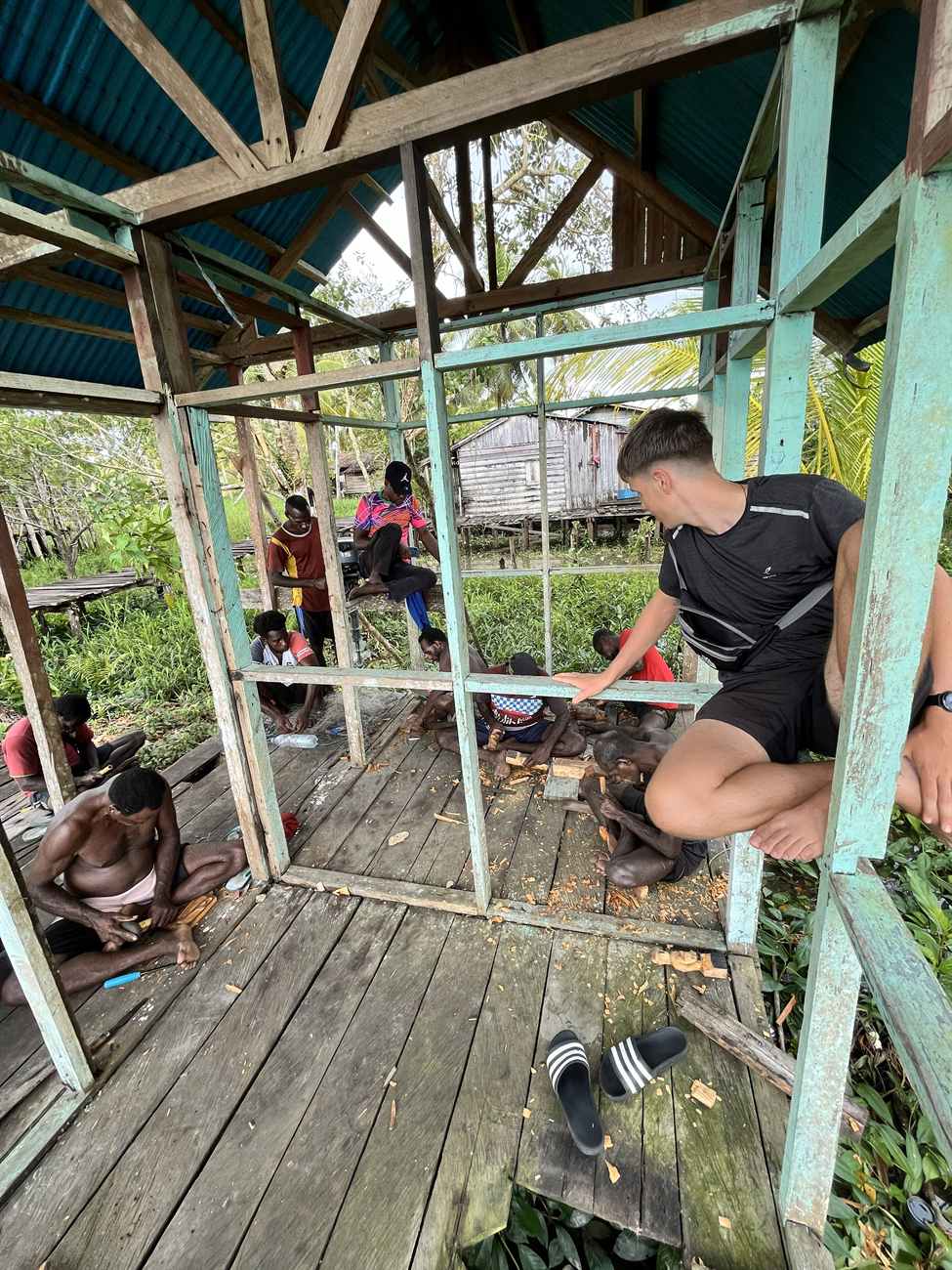
When we asked if we could watch them carve, the atmosphere changed immediately. Several men grabbed their machetes, searched for suitable wood, and a small, spontaneous competition began.
We explained openly that we could only buy three pieces because importing more into Germany wouldn't be allowed. For over two hours, the men carved all kinds of things: sculptures, decorations, even ashtrays. In the end, we bought three works, paid the carvers fairly, and were more than happy with the result.
Crocodiles, pythons, and life in the mangroves
Then one of the men casually mentioned that huge pythons are spotted at least once a week ? and asked if we wanted to come search with them.
The village is built on stilts, right inside the mangrove forest — perfect territory for snakes, and for crocodiles.
We were told that since the village was founded, two people had been killed by crocodiles. Each time, the entire village gathered to hunt that exact animal. They even showed us a photo of a crocodile over six meters long.
A night on the river: crocodile hunting
Another highlight was still ahead. One of the men went on his weekly crocodile hunt and invited us along ? on the condition that we would cover coffee, cigarettes, and flashlights. We said yes immediately.
At 10 pm, with light drizzle, we started. The method is simple: a scout scans the river with a flashlight, looking for the reflection of crocodile eyes. Then the boat approaches quietly, and the animal is taken with a small harpoon.
In this part of Papua, hunting and eating crocodiles is normal. For us, the night turned out differently than expected. For hours we didn't find any big animals.
One companion caught a baby crocodile only a few days old with his bare hands — and released it again. Other slightly larger animals were not as lucky.
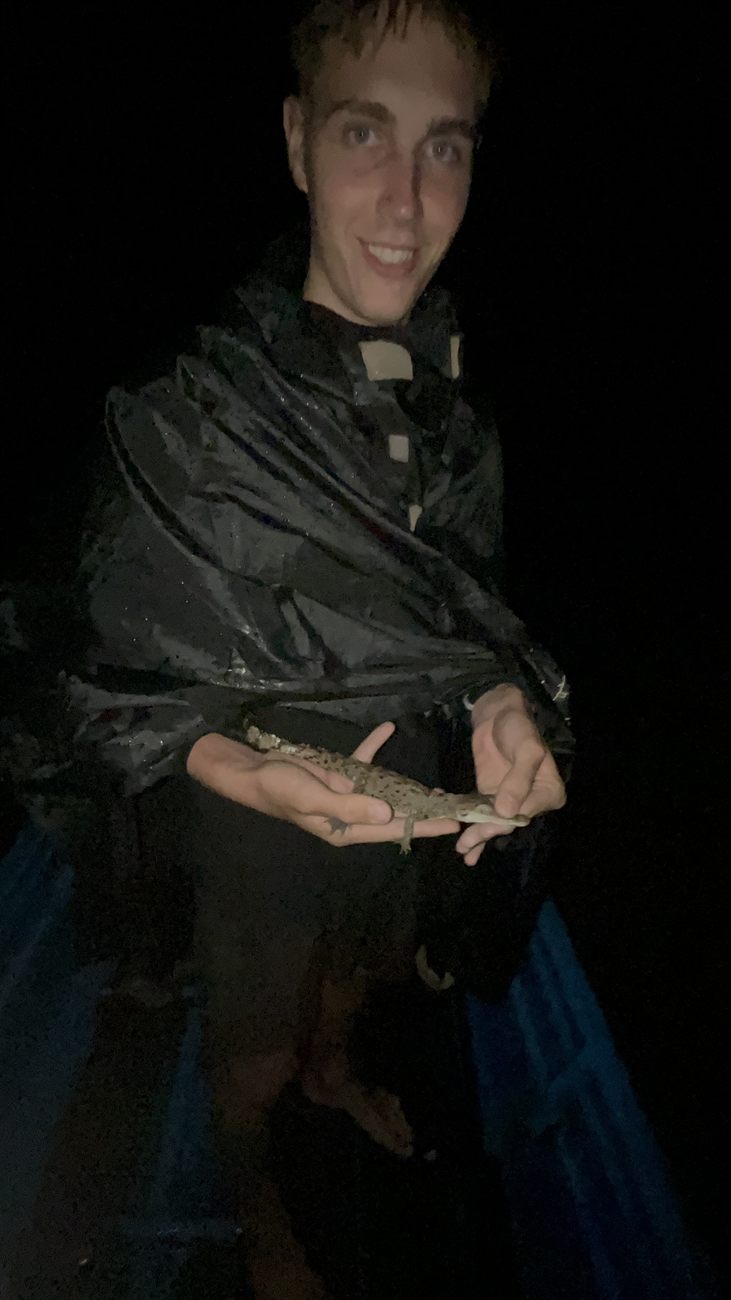
We spent around seven hours on the boat in the rain. The experience was incredibly special — and physically exhausting.
Leaving the Asmat region
After more than four days in the Asmat region, we left Agats — exhausted, but happy.
We finally experienced what we had hoped for in Papua: real contact with a local tribe, encounters on equal terms, and a deep look into a world only few travelers ever get to see.